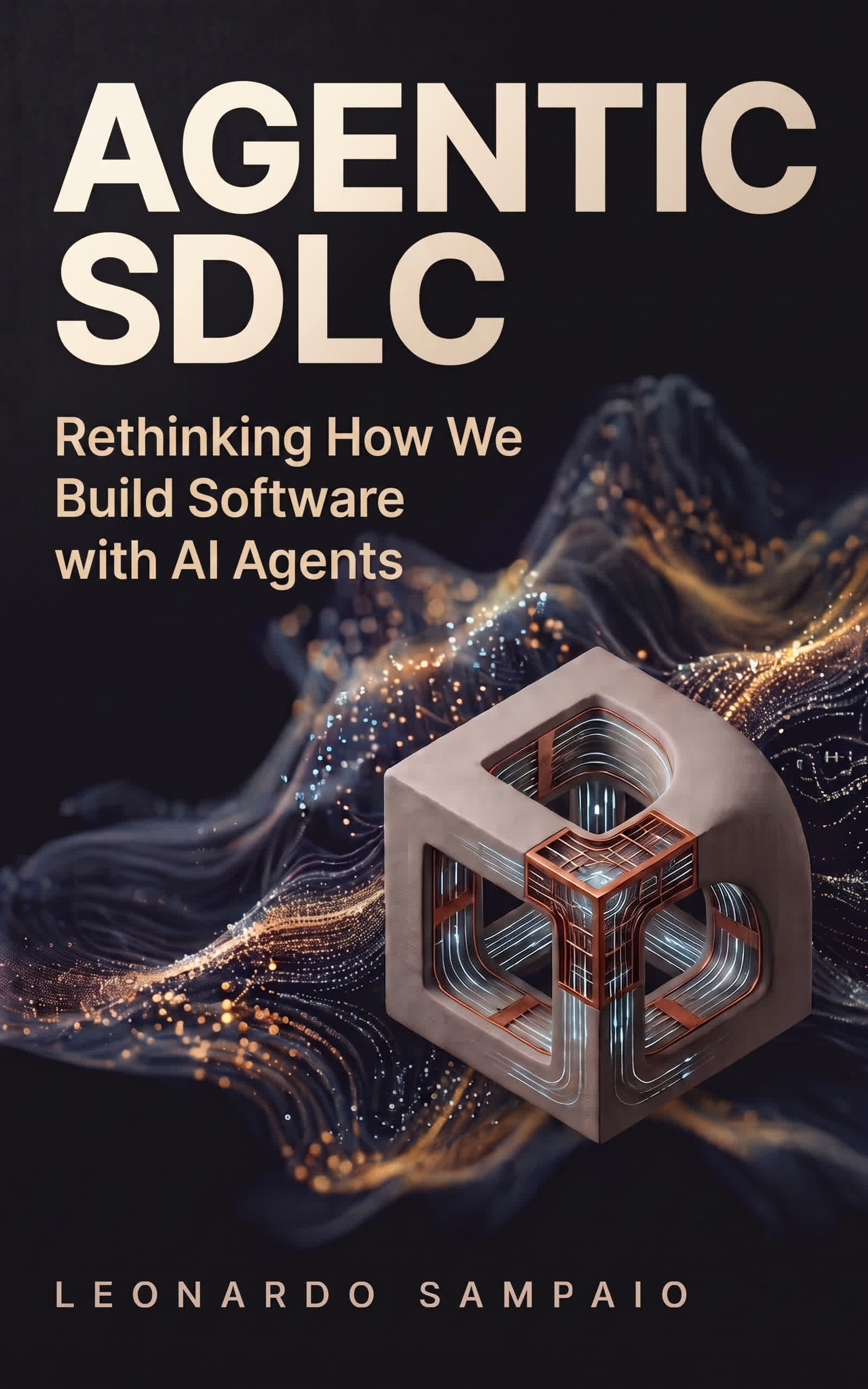
A short, opinionated book about what changes when machines become the executor — and how to redesign the lifecycle accordingly.
Every practice in software development rests on a single, largely unexamined assumption: humans perform the work.
That assumption was correct for the first seventy years of computing. It no longer is. AI agents can now interpret instructions, explore codebases, write code, run tests, analyze failures, and repeat that cycle — at machine speed. And yet most organizations are plugging machine-speed execution into human-speed processes and calling it progress.
Software development was designed around the cost of human execution. Agentic SDLC is designed around the cost of machine execution.
This book argues for something different: redesign the lifecycle around what machines can actually do, and then design the human role around what remains. It challenges the Agile ceremonies, role-based team structures, user-story heuristics, and governance practices that were designed around human execution — and proposes a simpler model.
Adding AI coding assistants to a Scrum process isn't transformation. It's accelerating one stage while leaving everything else untouched.
Humans define intent. Specifications preserve it. Agents execute. Verification validates. Evidence provides governance. Humans govern the transitions.
Not about a specific vendor, model, or tool. The principles apply whether you use Claude, Gemini, Copilot, or whatever emerges next.
Designed to be read in an afternoon and argued about for weeks. States opinions clearly, cites facts carefully, avoids hype.